
The passage of the bill will pave the way for setting up of a GST council that will decide the tax rate, cess and surcharges.

Despite recent gains, the BJP-led NDA is unlikely to achieve a two-thirds majority in the Rajya Sabha in the near future, highlighting the challenges in passing key legislation requiring constitutional amendments.

A Constitution Amendment Bill aimed at implementing 33 per cent reservation for women in legislatures and increasing Lok Sabha seats was defeated in Parliament, marking a setback for the government's efforts to empower women in politics.

'Their functioning is flawed, they are not accountable, they are opaque, they are non-transparent, they have lost credibility.'

Union Home Minister Amit Shah criticises the Congress and its allies for the defeat of the Constitution amendment bill aimed at implementing 33 per cent women's quota in legislative bodies before the 2029 Parliamentary polls.

The Supreme Court has refused to grant an interim stay on the imposition of Merchant Discount Rate (MDR) on UPI person-to-merchant transactions exceeding Rs 2,000, which is set to take effect from October 15. The court has agreed to examine the challenge to this new fee and has issued notices to the Centre, RBI, and NPCI, seeking their responses within four weeks. A Public Interest Litigation (PIL) argues that the levy lacks statutory safeguards, transparency, and public consultation, and could adversely affect merchants and consumers.

When it pretends to be deaf, a situation can snowball into something it cannot contain. The government cannot dismiss public anger merely because protests are inconvenient or politically embarrassing, asserts Ramesh Menon.

'93 lakhs deletions in Bengal, 96 lakhs in Tamil Nadu, 24 lakhs in Kerala, 77 lakhs in Gujarat, 45 lakhs in Madhya Pradesh, 44 lakhs in Rajasthan. 2.89 crores in Uttar Pradesh. Nearly 3 crores!'

India-US ties may be strained, but abandoning the relationship is not the answer; India must deal with Washington firmly without becoming either servile or hostile, asserts Ambassador T P Sreenivasan.
A petition has been filed in the Supreme Court challenging Chief Election Commissioner Gyanesh Kumar over alleged statutory duty violations and the controversial deletion of 13 crore voters during the Special Intensive Revision of electoral rolls, claiming decisions were made without the concurrence of other election commissioners.
'Looking at the situation purely on its Constitutional merits, the governor's conduct is defensible.' 'He is saying: You do not have a majority, so prove it. That is not an unreasonable position even if the timing and the political context make it deeply controversial.'

The Supreme Court is set to hear pleas challenging Chief Election Commissioner Gyanesh Kumar's alleged unilateral decisions without the concurrence of other election commissioners. The petitions seek his suspension and question actions like altering voter registration forms and handling electoral roll revisions in Goa and West Bengal, highlighting concerns over the multi-member character of the Election Commission.

The Supreme Court has issued notices to the Election Commission and the Centre regarding pleas alleging that the poll body made several decisions without the approval of the two election commissioners. The court stated it would annul any decisions found not to be in accordance with the law, while also refusing an interim order to restrain CEC Gyanesh Kumar from making decisions.
'This type of comprehensive legislation has never been introduced before in Parliament's history.' 'A bill that simultaneously affects ministers, chief ministers, and the prime minister represents completely uncharted Constitutional territory.' 'Throughout our nation's legislative history, the established policy has consistently held that public office holders should face punishment only after receiving conviction from a competent court of law. Without this safeguard, we risk systematic destabilisation, and our federal structure would face complete collapse.' 'Any central government could potentially deploy this legislation against state governments they oppose politically. This represents the most frightening prospect and dangerous possibility that these bills create.'

The Indian government and opposition parties are set for a showdown in Parliament over a Constitution amendment bill concerning the implementation of the women's quota law and the delimitation exercise. The Opposition is concerned about the potential impact of delimitation on the political representation of southern states.

Venu Srinivasan, a trustee and Tata Sons nominee director, has requested a regulatory inquiry into the governance of the Sir Dorabji Tata Trust, one of the charitable entities controlling 66 per cent of Tata Sons, citing concerns over trustee appointments and the trusts' involvement in commercial affairs.

The Samyukta Kisan Morcha (SKM) has ended its protest at the Chandigarh-Mohali border after receiving written assurances from the Punjab government. The government has pledged to convene a state Assembly session within a month to address issues concerning river waters, agriculture, and farmer loans, including resolutions against old water agreements and certain central bills.

'You can't have a runaway board that takes decisions against the active disagreement of the 66 per cent shareholder.'
'You can't have a runaway board that takes decisions against the active disagreement of the 66 per cent shareholder.'

The political confidence required to place high-end Japanese aircraft and personnel on Indian soil is itself a data point.
It indicates a level of trust that would have been difficult to imagine when India-Japan defence ties were largely symbolic, explains Varun Arya.

The Madhya Pradesh High Court's Indore bench has quashed an order by a municipal officer that altered a young woman's date of birth, citing a violation of natural justice. The case involves an interfaith marriage and allegations of 'love jihad', where the woman's father sought to prove her a minor by changing her birth record, leading to an FIR against her husband. The court directed the Chief Municipal Officer of Maheshwar to reconsider the application after giving the woman an opportunity to be heard.

The Punjab Assembly has passed the Punjab Prisons and Correctional Services Bill, 2026, to modernise the prison system, and the Societies Registration (Punjab Amendment) Bill 2026, to enhance transparency and accountability of societies.

Several opposition parties on Wednesday decided to jointly oppose the delimitation provisions in the Constitution amendment bill in Parliament, even as they reiterated support for women's reservation, with Mallikarjun Kharge alleging the move is politically motivated.

The BJP has strongly condemned the Congress's decision to sing only two stanzas of Vande Mataram, vowing to protect the dignity and national status of the full version of the national song and launch a nationwide campaign to spread its significance.

The Supreme Court stated it has not approved any modifications to Form 6, used for electoral roll inclusion, during the Special Intensive Revision. This observation came during the hearing of a Public Interest Litigation (PIL) challenging alleged unilateral decisions by the Chief Election Commissioner regarding changes to Form 6 and electoral roll revisions in states like Goa and West Bengal, without the concurrence of his colleagues. The court issued notice on the plea, highlighting concerns over collective decision-making within the Election Commission.

The Telecom Regulatory Authority of India (Trai) has mandated that service providers offer voice-and-SMS-only tariff plans, without bundled data, with a minimum validity of 30 days or less, aiming to provide more affordable and shorter-duration options for consumers who do not require data.

Union Minister Ramdas Athawale stated that opposing reservation is unconstitutional and that the policy would be given up if casteism is eliminated. He highlighted the historical context of reservations for SC/ST and OBCs, and the Modi government's EWS quota. Athawale also criticised the opposition, praised government achievements, and discussed various welfare schemes and infrastructure projects in Chhattisgarh.

Tata Capital remains confident in its 23-25 per cent growth guidance, driven by strong momentum in Retail and SME segments, despite facing pressures from rising funding costs and potential impacts from new RBI regulations on revolving credit.
A Division bench of Gauhati high court comprising Chief Justice A K Goel and Justice N K Singh has held that the protocol signed between India and Bangladesh on exchange of land can't be implemented without amending the Constitution and enactment of law.

A bill to implement 33 per cent reservation for women in Lok Sabha and state assemblies by increasing the lower house's strength to 850 is slated for introduction in Parliament. The bill seeks to amend Article 81 of the Constitution and utilise 2011 Census data for redrawing constituencies.

The Lok Sabha introduced four significant bills on Monday, including amendments to mines and minerals regulations, the establishment of a National Tribunals Commission, and the renaming of Kerala to Keralam, all while facing continuous protests from opposition members demanding a discussion on the July 20 police crackdown on students.

Lok Sabha takes up FCRA Amendment Bill amid opposition protests.
The Supreme Court has indicated that its judges may personally visit the National Testing Agency (NTA) to examine its upgraded facilities aimed at preventing recurring NEET paper leaks. This unusual move underscores the court's emphasis on institutional strengthening and permanent solutions. The NTA informed the bench that it has overhauled its system, while a high-powered panel is also working on structural reforms to ensure foolproof examination processes.

Maya Thakur, a transgender icon, advocates for amendments to the Transgender Persons (Protection of Rights) Amendment Act, 2026, to include self-identification and protect transgender individuals who wish to remain independent from traditional eunuch communities.

'This government is in the very bad habit of doing so again and again. It has done so many times.'
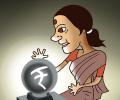
India's UPI system continues its rapid growth, dominating retail payments. Recent amendments to the Payment and Settlement Systems Act allow for targeted Merchant Discount Rates (MDR) on high-value merchant transactions, aiming to create a self-sustaining revenue model for the ecosystem while keeping P2P and low-value payments free. This move could generate significant revenue and encourage ecosystem participation.

A joint parliamentary committee has received an extension to submit its report on a significant bill. The Constitution (130th Amendment) Bill, 2025, proposes the removal of a prime minister, chief minister, or other ministers if they are jailed for 30 consecutive days on serious charges. The committee, chaired by BJP MP Aparajita Sarangi, needs further consultations before finalising its report.
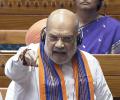
'Anyone they don't like can be potentially arrested and thrown in jail for 30 days to induce regime change.'
A joint parliamentary committee tasked with examining the 'One Nation One Election' bill has been granted an extension until the end of the Winter session to submit its report. The 41-member committee is reviewing the Constitution (One Hundred and Twenty-Ninth Amendment) Bill, 2024, and is conducting nationwide consultations on implementing simultaneous elections for Lok Sabha, state assemblies, and local bodies by 2029.
The Centre has informed the Supreme Court that the 'creamy layer' principle, which excludes affluent individuals from reservation benefits, does not apply to Scheduled Castes (SCs) and Scheduled Tribes (STs). This stance opposes Public Interest Litigations (PILs) seeking to implement such a principle for SC/ST reservations and to direct the government to formulate policies for more equitable distribution of reservation benefits.
